Danh mục: Uncategorized

  • KOMATSU PC200 vs KOBELCO SK200: Which Machine Really Saves More Money After 5 Years of Operation?

    KOMATSU PC200 vs KOBELCO SK200: Which Machine Really Saves More Money After 5 Years of Operation?

    When investing in a 20-ton excavator, the purchase price is never the only factor that matters. For construction companies, contractors, equipment buyers, and business owners, the more important question is:

    “Which machine will actually cost less to own and operate after 5 years?”

    This is exactly why many buyers hesitate between two of the most popular excavators in the market today: the Komatsu PC200 and the Kobelco SK200.

    One is widely known for durability and strong resale value. The other is praised for fuel efficiency and lower operating expenses. But when comparing the total cost of ownership of construction equipment, which one is truly the smarter investment?

    In this article, we will provide a detailed comparison of Komatsu PC200 vs Kobelco SK200 based on real-world operating costs, performance, durability, and long-term investment value.

    Overview of Komatsu PC200 and Kobelco SK200

    Komatsu PC200 – The “King of Durability” in the 20-Ton Class

    Komatsu PC200 has been one of the most trusted excavators in the Vietnamese and global construction markets for many years. It is commonly used in infrastructure projects, earthmoving, and quarry operations.

    Its biggest strengths include:

    • Exceptional durability
    • Strong undercarriage structure
    • Stable performance under heavy workloads
    • Widely available spare parts
    • Excellent resale value

    Many older PC200 units are still operating reliably after tens of thousands of working hours when properly maintained.
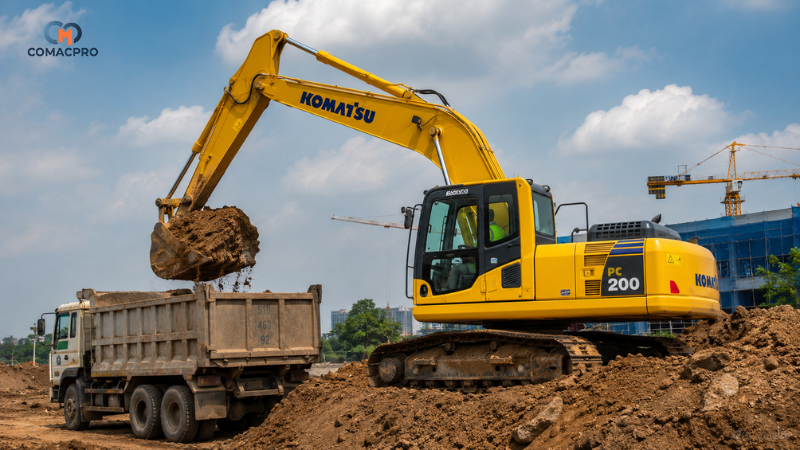
    Komatsu PC200 excavator operating efficiently on-site, delivering powerful performance and reliability for demanding construction projects.

    Kobelco SK200 – Optimized for Fuel Efficiency and Smooth Operation

    Kobelco SK200 is especially recognized for its fuel-saving performance and operator comfort.

    In recent years, many contractors and mid-sized construction businesses have preferred Kobelco because of:

    • Lower fuel consumption
    • Smooth hydraulic response
    • Comfortable cabin
    • Reduced operating costs
    • Stable digging performance

    For projects where excavators operate continuously for long hours every day, fuel savings become a major financial advantage.
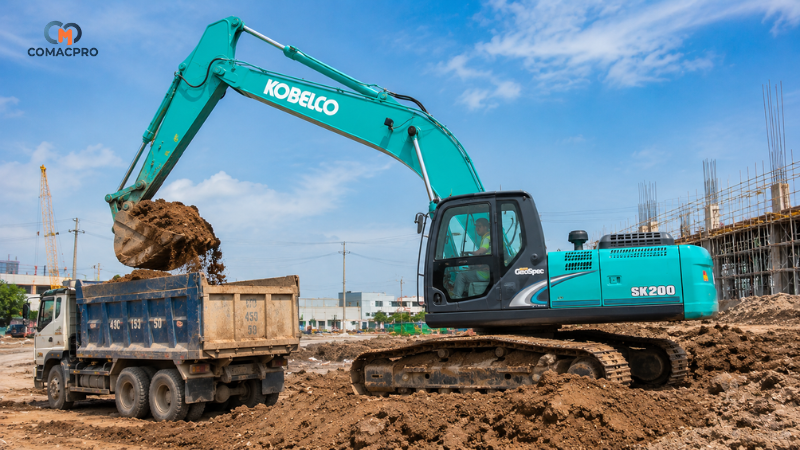
    Kobelco SK200 excavator delivering reliable performance and efficiency on demanding construction sites.

    Komatsu PC200 vs Kobelco SK200 Operating Cost Comparison

    Fuel Costs – SK200 Has the Advantage

    When it comes to fuel consumption, the Kobelco SK200 generally performs better.

    Under typical working conditions:

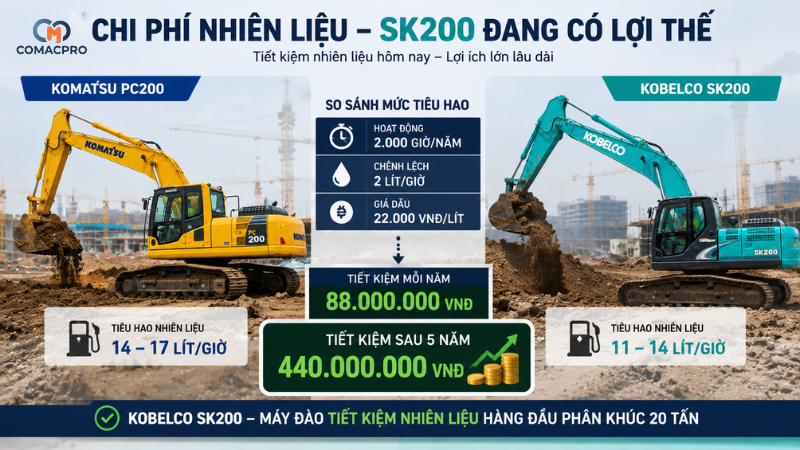
    • Komatsu PC200 consumes around 14–17 liters/hour
    • Kobelco SK200 consumes around 11–14 liters/hour

    The difference may seem small daily, but over 5 years, it becomes significant.

    For example:

    Assume the excavator operates 2,000 hours per year.

    If the difference is approximately 2 liters/hour and diesel costs average $0.90 per liter:

    2 × 2,000 × $0.90 = $3,600 per year

    Over 5 years:

    Approximately $18,000 in fuel savings.

    This is why many contractors consider the SK200 one of the most fuel-efficient 20-ton excavators available.

    However, actual fuel consumption still depends on:

    • Operator skills
    • Machine condition
    • Workload intensity
    • Jobsite conditions

    Kobelco SK200 stands out with superior fuel efficiency, helping contractors reduce operating costs and save significantly over long-term use.

    Excavator Maintenance Costs After 5 Years

    Komatsu PC200 Has Higher Spare Parts Costs

    One common reality in the market is that Komatsu spare parts are usually more expensive than Kobelco parts.

    Components such as:

    • Hydraulic pumps
    • Swing motors
    • Fuel injectors
    • Electronic control systems

    often cost more to replace on the PC200.

    However, the durability of the Komatsu PC200 is highly respected. With proper scheduled maintenance, the machine tends to experience fewer unexpected breakdowns.

    Kobelco SK200 Offers Lower Routine Maintenance Costs

    Kobelco provides several operational advantages:

    • Easier maintenance
    • Reasonable replacement part pricing
    • Efficient hydraulic system

    That said, under extremely demanding environments such as quarry operations or heavy-duty earthmoving, some contractors believe the Kobelco SK200 may not be as rugged as the Komatsu PC200.

    As a result, repair costs can increase if maintenance is neglected.

    Real-World Performance: PC200 or SK200?

    Komatsu PC200 Excels in Heavy-Duty Applications

    For projects involving:

    • Rock excavation
    • Large-scale earthmoving
    • Infrastructure construction
    • Multi-shift heavy operation

    the Komatsu PC200 often feels stronger and more stable.

    Its ability to handle heavy workloads continuously is one reason why many businesses consider it a highly durable excavator worth long-term investment.

    Kobelco SK200 Focuses on Cost Efficiency

    For projects such as:

    • Residential construction
    • Urban projects
    • Medium-scale infrastructure
    • Fuel-sensitive operations

    the SK200 demonstrates clear advantages.

    Its responsive hydraulic system allows smoother operation while reducing unnecessary fuel consumption.

    If a contractor prioritizes reducing excavator operating costs, the Kobelco SK200 becomes an attractive option.

    Resale Value After 5 Years

    Komatsu PC200 Holds Value Better

    One of Komatsu’s strongest advantages is market liquidity.

    In the used construction equipment market:

    • PC200 units are easier to sell
    • Depreciation is lower
    • Buyer demand remains strong

    Even older models maintain stable market value.

    This is extremely important for companies planning to rotate or upgrade equipment after several years.

    Kobelco SK200 Depreciates Slightly Faster

    Although the SK200 remains highly popular, it generally loses value faster than the PC200.

    Main reasons include:

    • Market preference for Komatsu
    • Stronger reputation for durability
    • Higher demand in the used equipment market

    However, the fuel savings generated by the SK200 can offset part of the depreciation difference over time.

    So, Should You Buy the Komatsu PC200 or Kobelco SK200?

    The answer depends entirely on your business operations and project requirements.
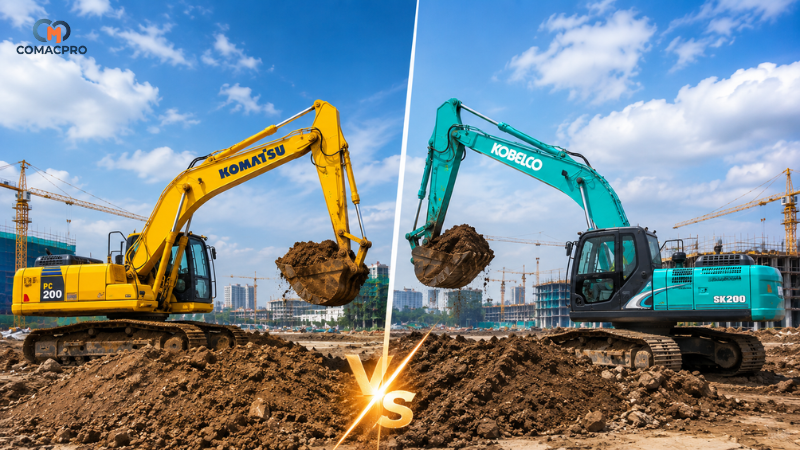
    Komatsu PC200 or Kobelco SK200

    Choose the Komatsu PC200 If You Prioritize:

    • Long-term durability
    • Heavy-duty projects
    • High-intensity operation
    • Strong resale value
    • Minimal unexpected downtime

    The PC200 is ideal for infrastructure contractors, quarry operators, and large construction companies.

    Choose the Kobelco SK200 If You Prioritize:

    • Fuel efficiency
    • Lower operating costs
    • Residential or urban projects
    • Better operating cost-to-performance ratio
    • Easier maintenance

    The SK200 is especially suitable for contractors looking to optimize monthly cash flow and operating expenses.

    Real Business Perspective on 20-Ton Excavator Investments

    Today, professional contractors no longer focus only on purchase price.

    Instead, they evaluate:

    • Fuel costs over 5 years
    • Maintenance expenses
    • Repair downtime
    • Resale value
    • Project productivity

    This approach is known as Total Cost of Ownership (TCO).

    From this perspective:

    • Komatsu PC200 stands out in durability and resale value
    • Kobelco SK200 leads in fuel efficiency and operating cost savings

    There is no universally “perfect” excavator. The best choice depends on your actual operational needs.

    Final Verdict

    If your company needs a durable excavator capable of handling demanding projects while maintaining excellent resale value, the Komatsu PC200 remains one of the most reliable investments available.

    On the other hand, if your primary goal is to reduce fuel costs and optimize day-to-day operating expenses, the Kobelco SK200 clearly offers strong advantages.

    As fuel prices and operational expenses continue to rise, evaluating the total cost of ownership rather than focusing only on the initial purchase price is the smartest way to maximize equipment investment efficiency.

    FAQ – Frequently Asked Questions

    Is the Komatsu PC200 fuel efficient?

    Yes, but its fuel consumption is generally slightly higher than the Kobelco SK200 under similar operating conditions.

    Is the Kobelco SK200 durable?

    Yes. The Kobelco SK200 is considered a reliable excavator. However, for extremely heavy-duty applications, many operators believe the Komatsu PC200 offers greater long-term toughness.

    Which excavator has better resale value after 5 years?

    The Komatsu PC200 typically maintains stronger resale value and higher demand in the used equipment market.

    Which machine is better for small and medium-sized contractors?

    If reducing operating costs is the priority, the SK200 is often the better option. If long-term durability and resale value matter more, the PC200 is an excellent choice.

    Final Verdict

    If your company needs a durable excavator capable of handling demanding working conditions while maintaining strong resale value over the years, the Komatsu PC200 remains one of the most reliable investment choices in the market today.

    On the other hand, if your priority is to optimize fuel efficiency and reduce daily operating expenses, the Kobelco SK200 clearly offers strong advantages.

    As fuel prices and operating costs continue to increase, evaluating the total cost of ownership instead of focusing only on the initial purchase price is the smartest way to maximize long-term investment efficiency.

    At ComacPro, we understand that every construction project has different operational requirements, budgets, and working conditions. That is why choosing between the Komatsu PC200 and Kobelco SK200 should not be based solely on brand preference. Buyers should carefully evaluate machine condition, operating hours, maintenance history, jobsite requirements, resale potential, and long-term operating costs.

    ComacPro supports contractors, construction companies, and equipment buyers in sourcing high-quality used construction machinery. Our team can assist you in comparing machine options, evaluating technical conditions, analyzing investment efficiency, and finding the most suitable excavator for your project needs.

    Whether you are looking for a Komatsu PC200, Kobelco SK200, or any other 20-ton excavator, ComacPro is ready to help you make a smarter and more cost-effective investment decision.

    Building tomorrow’s infrastructure with vision, precision, and dedication.

    Contact ComacPro

    If you are looking for professional advice or reliable sources for construction machinery and excavators, feel free to contact ComacPro for quick support and consultation.

    • Website: https://comacpro.net/
    • WhatSapp: +84 . 96 . 744 . 1248
    • Email: Support@comacpro.net
    • Address: 210 Le Trong Tan Street, Phuong Liet District, Hanoi, Vietnam.

    ComacPro – A trusted marketplace connecting buyers and sellers of construction machinery and heavy equipment for contractors and businesses.
  • Common Mistakes Contractors Make When Investing in New Construction Equipment

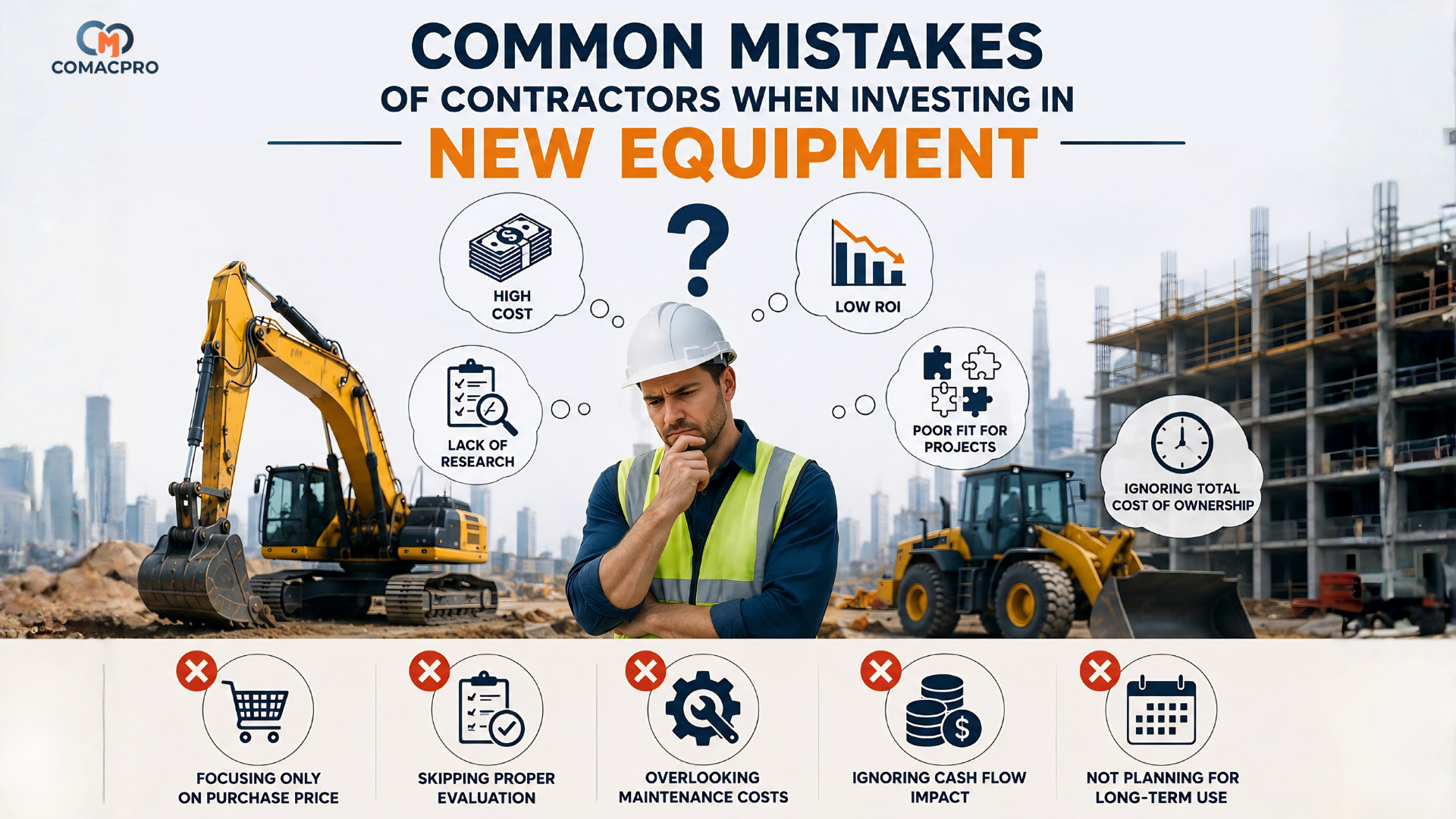
    Common Mistakes Contractors Make When Investing in New Construction Equipment

    Avoid costly mistakes when investing in construction equipment. Learn how contractors can reduce risks, optimize costs, and improve project efficiency.

    For most contractors and construction businesses, investing in equipment is not simply about purchasing machinery. It is a long-term business decision directly tied to project timelines, operational efficiency, cash flow, and profitability.

    However, many companies still make investment decisions based on short-term needs, low purchase prices, or market trends rather than actual operational requirements.

    Their biggest concerns are:

    • Buying the wrong equipment for the project
    • Unexpected operating and maintenance costs
    • Equipment breakdowns delaying project timelines
    • Poor after-sales support from suppliers
    • Low equipment utilization and slow ROI

    This is why many decision-makers actively search for:

    • construction equipment investment tips
    • common contractor equipment mistakes
    • how to choose the right construction equipment
    • efficient construction equipment investment

    Common Mistakes Contractors Make When Investing in New Construction Equipment

    In the construction industry, equipment investment plays a critical role in determining project performance and business competitiveness.

    A wrong investment decision can lead to higher operating costs, project delays, reduced productivity, and significant financial pressure. Many contractors have spent hundreds of thousands of dollars on machinery that ultimately failed to deliver the expected return.

    So, what are the most common mistakes contractors make when buying new construction equipment?

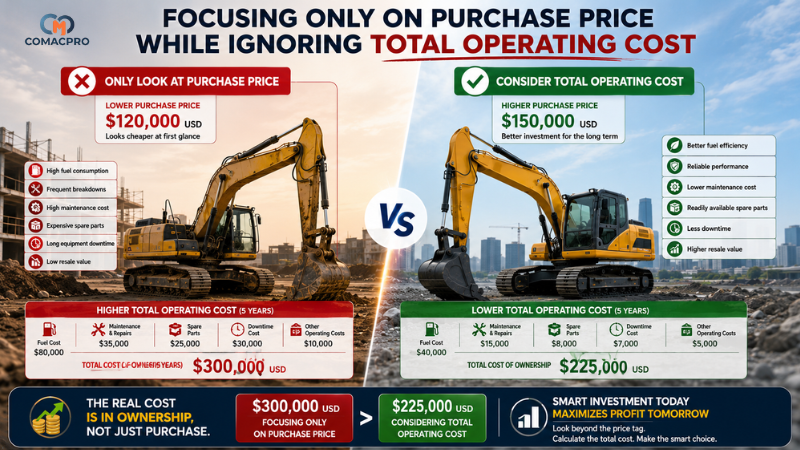
    Focusing Only on Purchase Price Instead of Total Operating Cost

    One of the biggest mistakes contractors make is choosing equipment based solely on the initial purchase price.

    While lower-cost machines may seem attractive at first, the real financial burden often appears later through:

    • Fuel consumption
    • Maintenance expenses
    • Spare parts replacement
    • Equipment downtime
    • Repair costs
    • Operator inefficiency

    In many cases, cheaper equipment ends up costing more over its lifecycle due to high maintenance requirements and operational inefficiencies.

    For example, a low-cost excavator with poor fuel efficiency and limited local support may create long-term expenses far exceeding the initial savings.

    Smart equipment investment is not about buying the cheapest machine — it’s about minimizing total operating costs and maximizing long-term efficiency.

    Practical Solution

    Before investing, businesses should calculate the Total Cost of Ownership (TCO) over at least 3–5 years.

    A machine with a higher upfront cost but lower fuel consumption, reliable performance, and strong after-sales support often delivers better long-term value.

    Buying Equipment Based on Trends Instead of Actual Project Needs

    Many contractors purchase machinery simply because competitors are using it or because certain equipment is trending in the market.

    This often leads to:

    • Equipment unsuitable for actual projects
    • Oversized machinery with low utilization
    • Increased fuel consumption
    • Higher depreciation costs
    • Reduced operational efficiency

    For instance, some small contractors invest in large excavators designed for major infrastructure projects, even though their typical projects are medium-sized residential developments.

    As a result, the equipment becomes expensive to operate while failing to maximize productivity.

    How to Choose the Right Construction Equipment

    Before making an investment, contractors should evaluate:

    • Typical project scale
    • Site conditions
    • Frequency of equipment usage
    • Long-term utilization potential
    • Future project pipeline

    The best equipment is not necessarily the most expensive one. It is the equipment that improves productivity while optimizing operating costs.

    The right construction equipment is not the most expensive one — it’s the one that best fits your projects, operations, and long-term business goals.

    Ignoring Supplier Reputation and After-Sales Support

    Another common contractor equipment mistake is focusing only on pricing while overlooking supplier reliability.

    Poor supplier support can lead to:

    • Delayed spare parts availability
    • Long repair times
    • Lack of technical assistance
    • Increased downtime
    • Operational disruptions

    In construction, even a few days of equipment downtime can significantly impact project schedules and profitability.

    What Businesses Should Prioritize

    When looking for reliable construction equipment suppliers, companies should assess:

    • Warranty policies
    • Spare parts availability
    • Technical support capabilities
    • Industry experience
    • Customer reviews
    • Response time

    Today, many contractors are turning to construction equipment marketplaces to:

    • Compare equipment options
    • Access multiple suppliers
    • Improve pricing transparency
    • Reduce purchasing risks

    This approach helps businesses make more informed investment decisions.

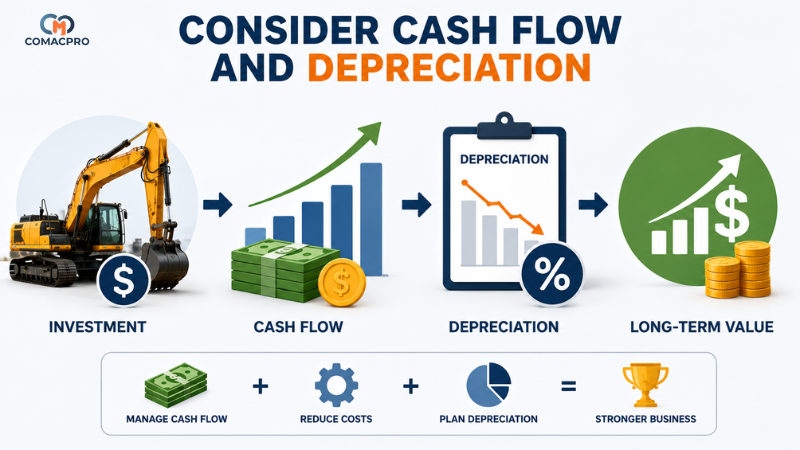
    Failing to Consider Cash Flow and Depreciation

    Many businesses invest heavily in machinery without properly analyzing equipment utilization rates or return on investment.

    As a result:

    • Equipment sits idle for long periods
    • Cash flow becomes strained
    • Businesses struggle with financing future projects
    • Depreciation costs increase

    This issue becomes even more serious during market downturns or periods of low construction demand.

    Smart Equipment Investment Strategies

    Before purchasing equipment, contractors should ask:

    • How frequently will the machine be used?
    • What is the expected ROI period?
    • Can the equipment be rented out when idle?
    • Should the company buy new or used equipment?
    • Would renting equipment be more cost-effective?

    These considerations are essential for reducing investment risks and optimizing operational efficiency.

    Smart equipment investment is not just about buying machines — it’s about protecting cash flow and maximizing long-term business value.

    Neglecting Operator Training

    Even high-quality equipment can become inefficient if operators are not properly trained.

    Poor operation practices often lead to:

    • Excessive fuel consumption
    • Faster equipment wear and tear
    • Increased repair costs
    • Workplace accidents
    • Reduced machine lifespan

    Many operational losses in the construction industry are caused not by equipment defects, but by incorrect handling and maintenance procedures.

    Recommended Solution

    Construction businesses should:

    • Conduct regular operator training
    • Implement maintenance checklists
    • Monitor equipment performance continuously
    • Track fuel consumption and operating efficiency

    Proper training is a key factor in maximizing long-term equipment performance.

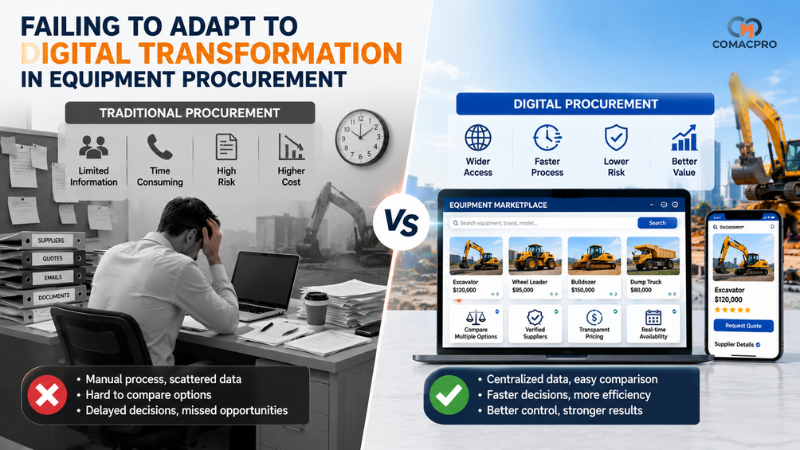
    Failing to Adapt to Digital Transformation in Equipment Procurement

    Many contractors still rely on traditional methods to source equipment:

    • Personal relationships
    • Brokers
    • Offline networks
    • Manual supplier searches

    This often limits transparency and increases the risk of purchasing unsuitable equipment.

    Today, digital construction equipment marketplaces provide businesses with:

    • Faster equipment sourcing
    • Easier supplier comparison
    • Greater pricing transparency
    • Access to a wider supplier network
    • More efficient procurement processes

    Digital platforms are rapidly becoming the preferred solution for modern construction businesses looking to reduce risks and improve purchasing decisions.

    Companies that fail to adapt to digital procurement risk slower decisions, higher costs, and missed business opportunities.

    How to Invest in Construction Equipment More Efficiently

    Successful equipment investment is not about buying the most expensive machine. It is about selecting equipment that aligns with operational goals and long-term business strategy.

    An effective investment decision should:

    • Match project requirements
    • Improve productivity
    • Reduce operating costs
    • Ensure reliable after-sales support
    • Support long-term scalability

    Construction equipment marketplaces can also help businesses:

    • Compare multiple equipment options
    • Connect with trusted suppliers
    • Improve procurement efficiency
    • Reduce investment risks

    FAQ – Frequently Asked Questions

    Should contractors buy new or used construction equipment?

    New equipment is ideal for long-term reliability and lower maintenance risks, while used equipment can help reduce initial investment costs if properly inspected.

    How do I choose the right construction equipment?

    Businesses should evaluate project scale, site conditions, equipment utilization frequency, and budget before making a purchase.

    Why does equipment directly affect project timelines?

    Equipment breakdowns or unsuitable machinery can delay construction schedules, increase labor costs, and reduce operational efficiency.

    What are the benefits of construction equipment marketplaces?

    Marketplaces help contractors compare equipment, connect with suppliers, improve transparency, and reduce procurement risks.

    Conclusion

    Investing in construction equipment is a strategic business decision that directly impacts operational efficiency, project timelines, and long-term profitability.

    The wrong investment can lead to unnecessary costs, downtime, and reduced competitiveness. On the other hand, choosing the right equipment and supplier can help businesses:

    • Improve project productivity
    • Reduce operating costs
    • Optimize equipment utilization
    • Enhance project execution efficiency

    For companies looking to connect with trusted suppliers, compare multiple equipment options, and streamline procurement decisions, platforms like COMACPRO can help simplify the equipment sourcing process while improving market transparency.

    CONTACT US:

    Website: https://comacpro.net/
    Fanpage: https://www.facebook.com/comacproglobal
    WhatsApp: +84.96.744.1248
  • Hello world!

    Welcome to WordPress.